The Minecraft Coping Strategy
How Minecraft pulled me through the darkest period of my life, and how it can help you too!

Tend your own garden…
A couple of nights ago, I was having one of my routine conversations with my best friend, and during the conversation, she was squatting down on her front lawn, tending to the overgrown weeds that were dangerously encroaching on a biohazard. After about 15 minutes, she paused and said that she felt that only 7% was done. I quickly did some math in my head and deduced that she would accomplish 28% per hour, and therefore would require a little over three hours to complete the task. She said it was unlikely to be done today, but she was committed as she rather enjoys this task.
Immediately, I was flummoxed. Being a city-born, bred, raised, and groomed individual, I have never had a garden of my own, nor did I ever really yearn for one. We had a small yard growing up, and the occasions when we needed to trim the grass were often seen as a chore or a punishment to be doled out. So to hear her say how much she enjoyed the activity of pulling weeds out of the ground, a task she would have to do several times throughout the long Iowan summer, my reaction was incredulity. Weeds? Really?
So, I asked what about weeding of her lawn was appealing? Being outdoors? The repetitive nature of the task? No. She answered that it was not about the weeds, but how she felt about her home, her space, if the weeds were left unchecked and permitted to overgrow. She described a feeling of chaos that would encroach on her sense of peace.
I let this sit with me for a while, and last night, while having a shower, where most of my deeper thoughts tend to formulate, I was able to draw a parallel to something in my life that felt connected.
Outer Child meets Inner Child
In 2019, I got divorced from my second wife. Our son was just three at the time, heading toward four. That would’ve been enough upheaval on its own, but then the pandemic hit. Suddenly, I was isolated, alone, and caring for our son half the week. His daycare shut down. Kindergarten became remote. And if you’ve never done remote schooling with a kindergartener, don’t. It’s hell. My kid wasn’t cooperative, I had no support system, and the bubble everyone else talked about during COVID? Mine was just me, my son, and my dog. I went a year and a half without social contact beyond that.
I took the virus seriously, especially after having a cardiac procedure a few months earlier. Then I got pneumonia. It was a bad time health-wise, and it made me hypervigilant. My world had shrunk to four walls, a child, a screen, and constant fear.
One weekend, my son was on his iPad playing Minecraft. That was his escape. He’d mod it constantly, break it, and I’d fix it. That day, he asked me to play with him. I was 48 and had never really touched Minecraft before. I knew a little, but not enough to be useful. I told him I’d join if he taught me how.
He set us up in creative mode: an open sandbox where you can build whatever you want with unlimited resources. No monsters, no survival mechanics. Just blocks and imagination. He built a treehouse. Then he turned to me and asked, “Dad, can you build a school for the town?”
So I did. I started from scratch, trying to replicate the look and feel of the public schools I remembered from New York and the one he attended in Jersey City. Beige brick, barred windows, a slightly prison-like vibe that somehow still reads unmistakably as “school.”
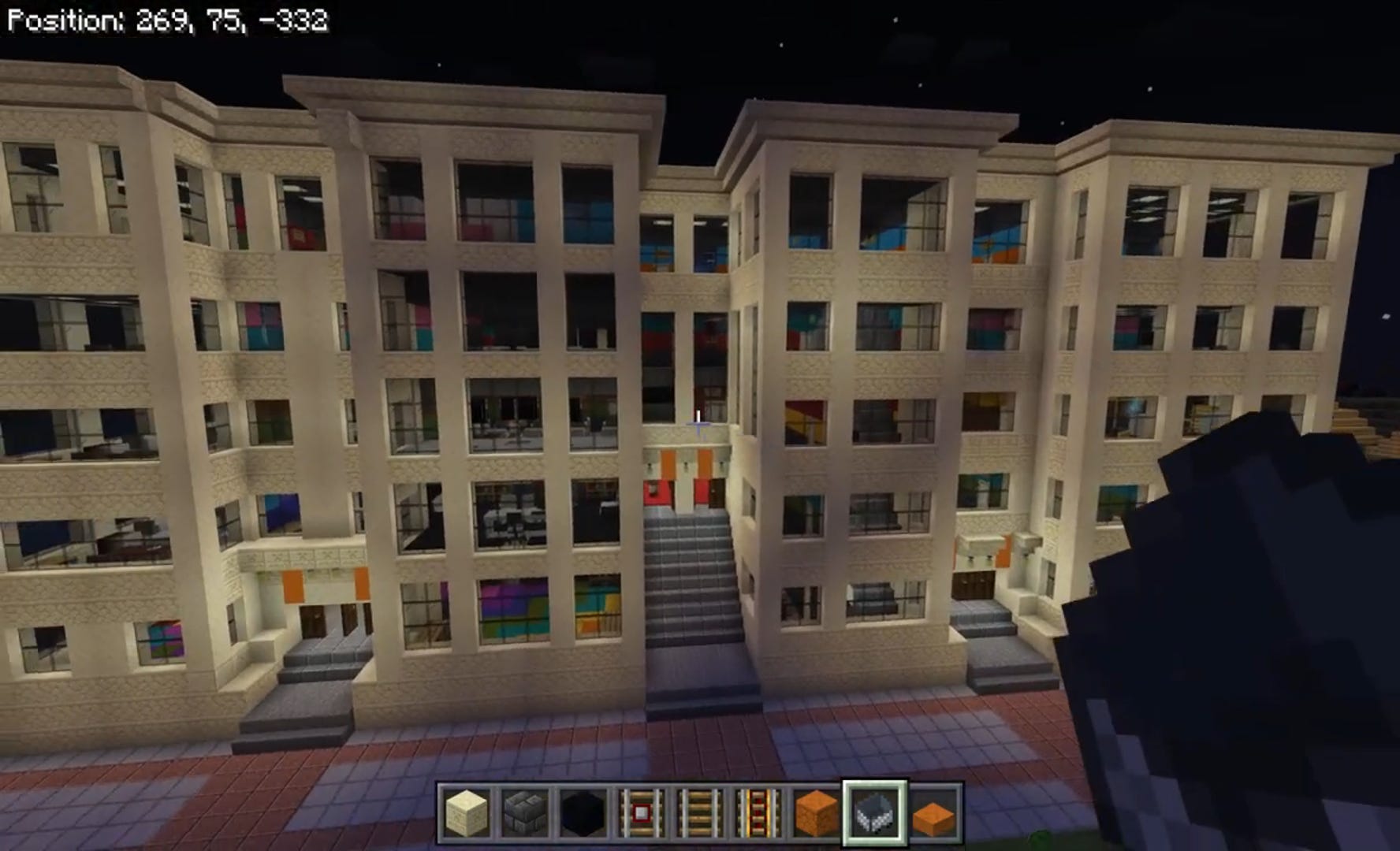
That first build took six weeks. I played with him, and I played alone. The school had eight floors: dozens of classrooms, offices, a library, an auditorium with working house lights, a choir room, a teacher’s lounge, a cafeteria, a pool, and a gym buried in the sub-basement. It was absurdly detailed, but I kept going.
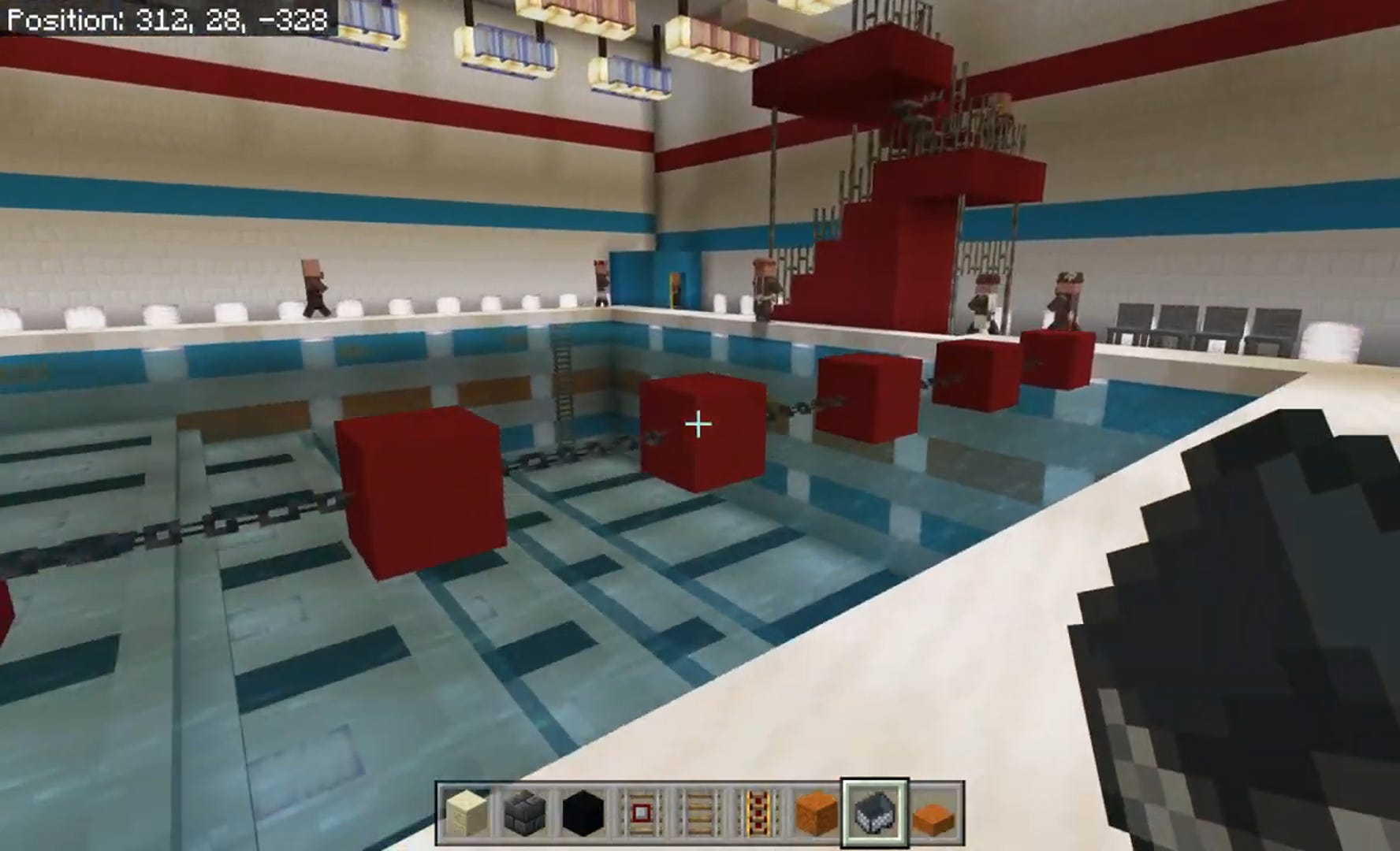
When I finally showed him the finished school, he played in it for about five minutes and then told me he didn’t want to build with me anymore. He said I was too good at Minecraft. I told him the truth: I’m not better. I just have more patience. That’s all being an adult means sometimes.
He kept building his little villages, and I kept building mine. And without realizing it, I had started to build something much bigger than a school.
The Subway Obsession Returns
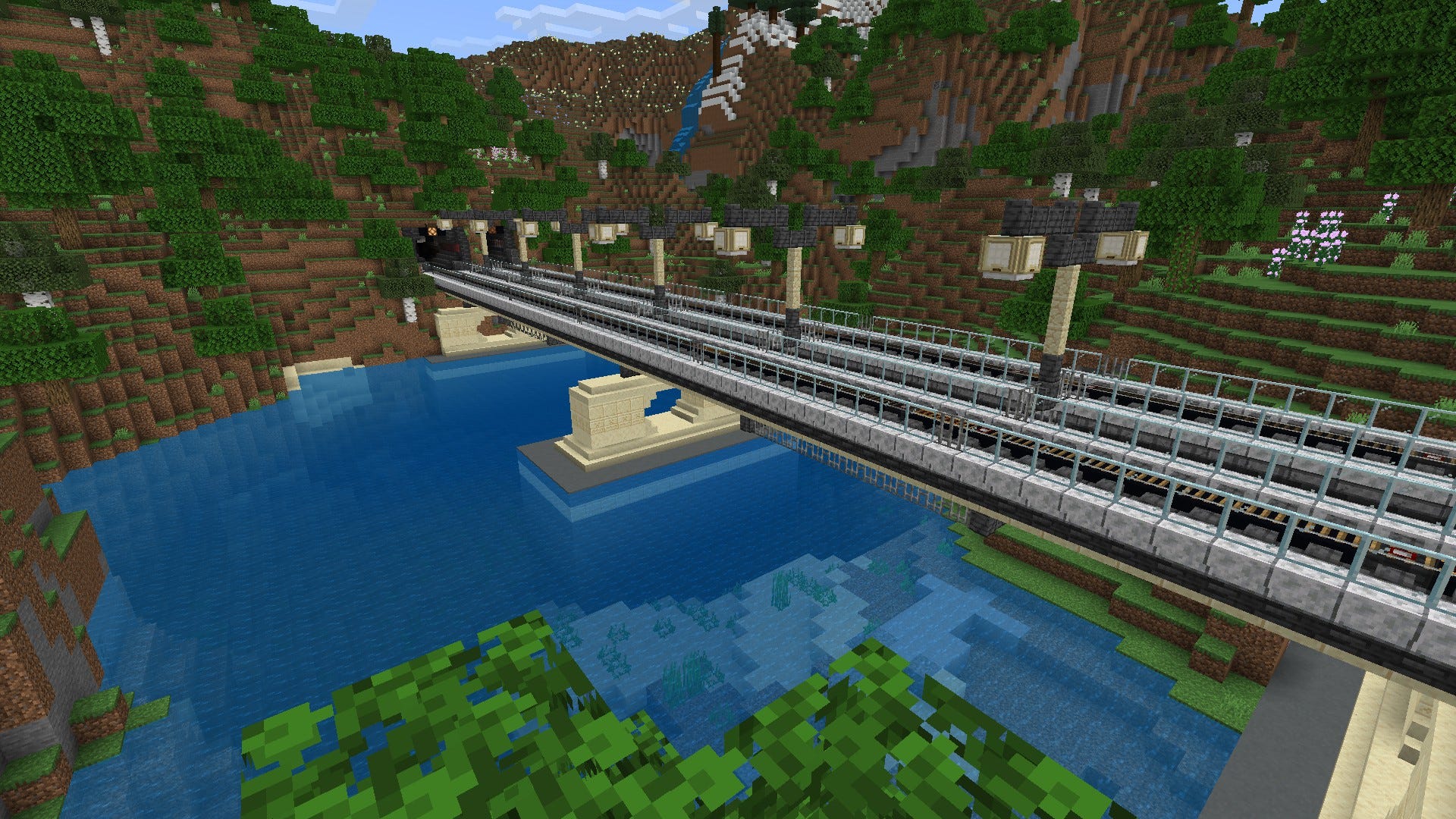
After I built the school, I stood in one of the stairwells and looked out the window. I imagined seeing something beautiful in the distance: a suspension bridge, maybe. So I flew over to the water, found a good spot, and started laying down black concrete. What began as a small scenic idea turned into a full-blown bridge project. Before I knew it, I had added train tracks so I could ride a minecart across the bridge and experience it in motion.
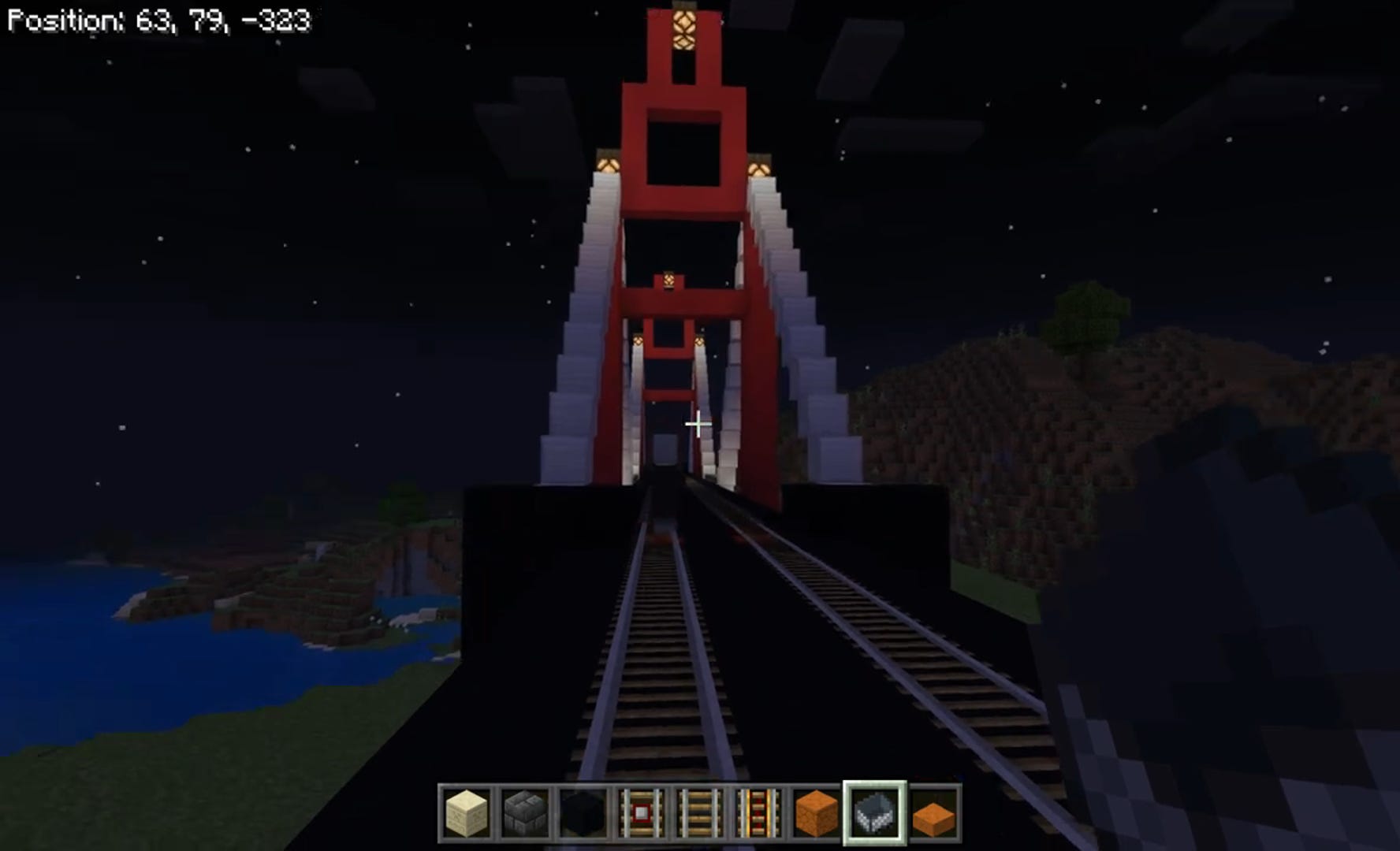
That moment was the spark. The first station followed, and then another. I built a stop for a restaurant I made for my son, then a hub station near his treehouse. I started connecting all these locations with tunnels, laying tracks across mountains, rivers, and villages. I wasn’t just playing Minecraft anymore. I was building a subway system, and I loved every second of it.
You see, when I was a kid, I was obsessed with the New York City subway. I knew all the stations by name. I used to draw them with crayons, copying the signage, imagining the tunnels twisting underneath the city. Riding the subway with my parents was a highlight of my childhood, especially standing at the front of the car and watching the dark tunnel whip past the window.
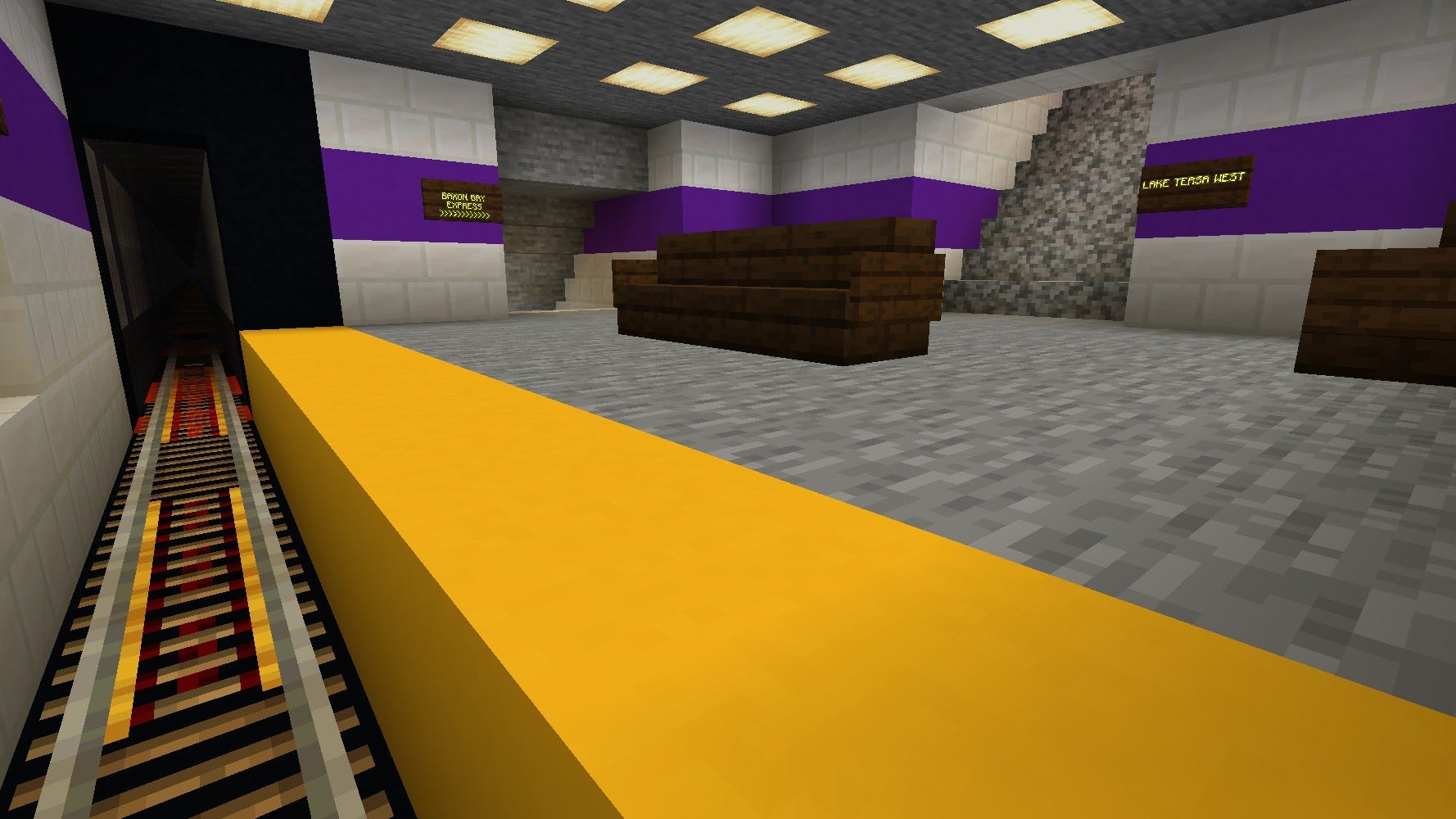
Now, decades later, I was back inside that fantasy. This time, however, I was able to create the stations exactly as I wanted. Clean. Symmetrical. Connected. I designed white tile walls with color-coded stripes, similar to those found in many Brooklyn stations. I created transfer stations. I simulated express tracks and abandoned stops. I even programmed redstone-powered lighting that flickered on as you rode through, mimicking that strange beauty of dim tunnel bulbs flashing past your window.
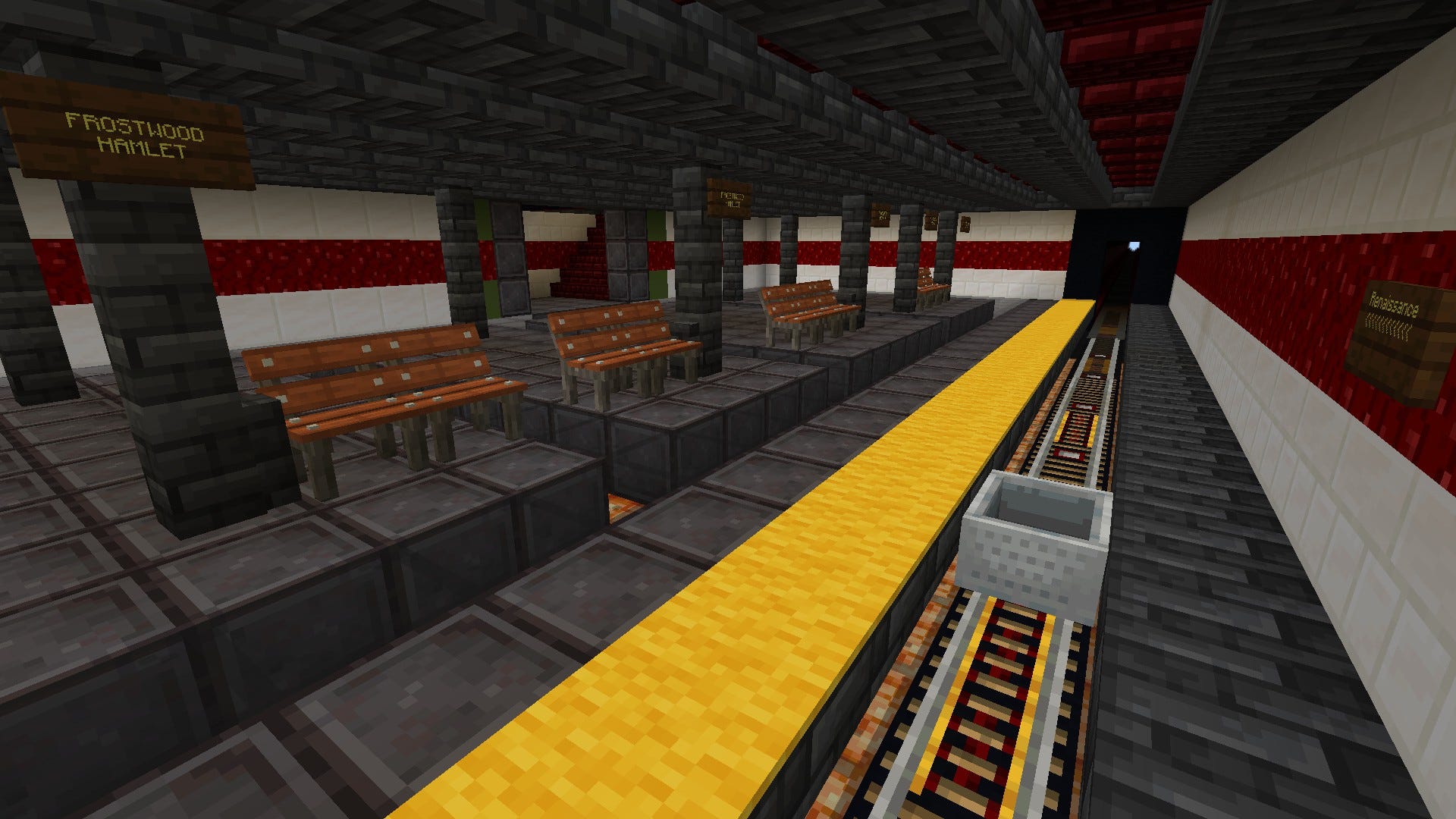
I had no idea how deep this would go. Eventually, I had 79 stations across multiple lines. I found myself drawing maps, plotting junctions, keeping a spreadsheet of all the stations and locations, and giving each stop a distinct look and name. It wasn’t about impressing anyone. No one else was playing. It was just me, building order into a world that had spun completely out of control.
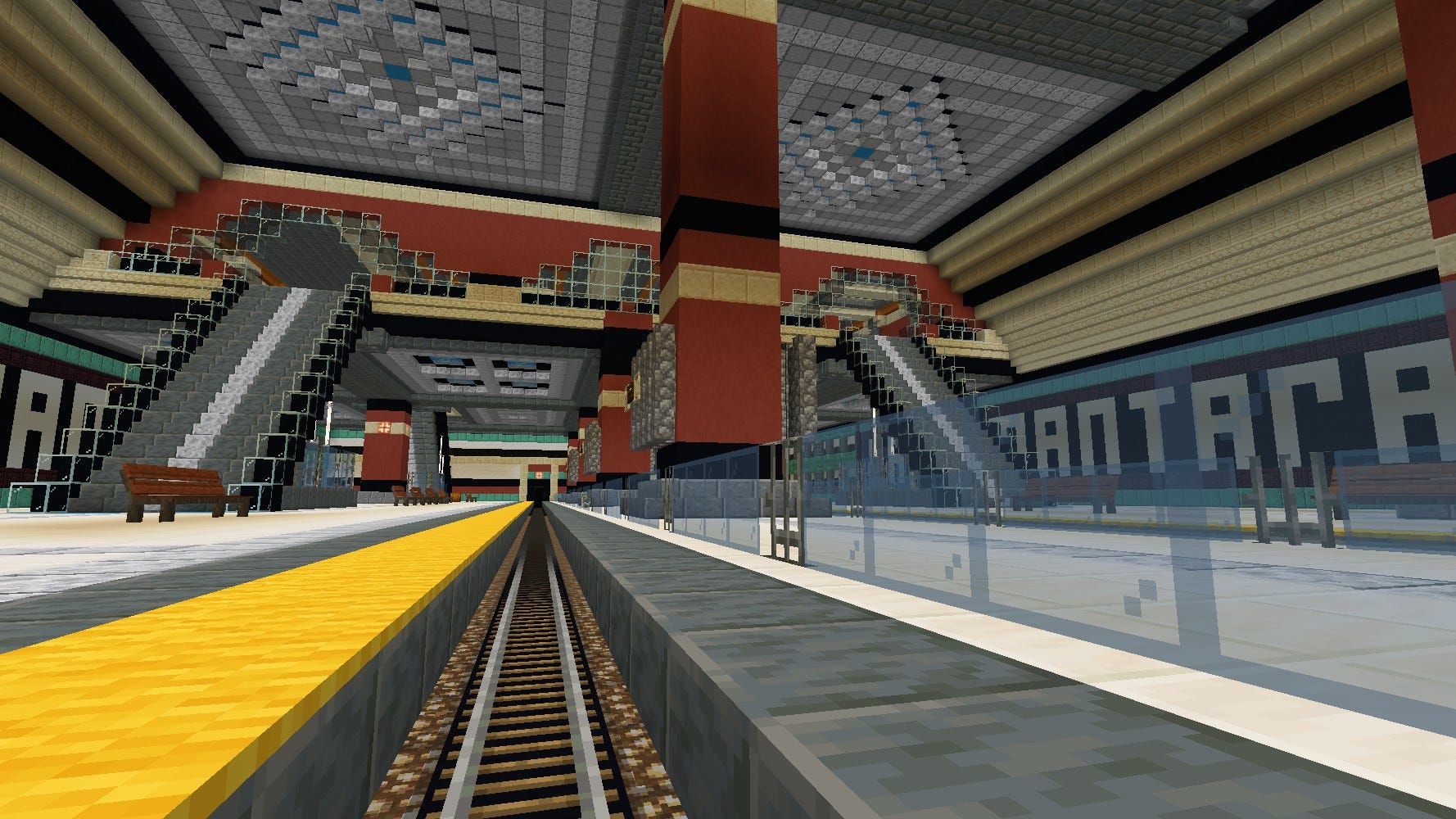
This subway, my subway, became a way to soothe something deep inside. I was the kid again, drawing tunnels on paper. But now I had the tools to bring it all to life.
Creative Control as Survival
Looking back, it’s obvious what Minecraft became for me. It wasn’t just a creative outlet. It was a coping strategy. My life during the pandemic had collapsed into isolation, health scares, chronic anxiety, and the quiet grind of raising a child. I needed something to hold onto. Something I could control.
Every station I built was a way to fight back against the chaos. Every detail I refined gave me a sense of order that my real life couldn’t offer. I would go back and tweak lighting, adjust angles, rebuild platforms, all because it gave me peace.
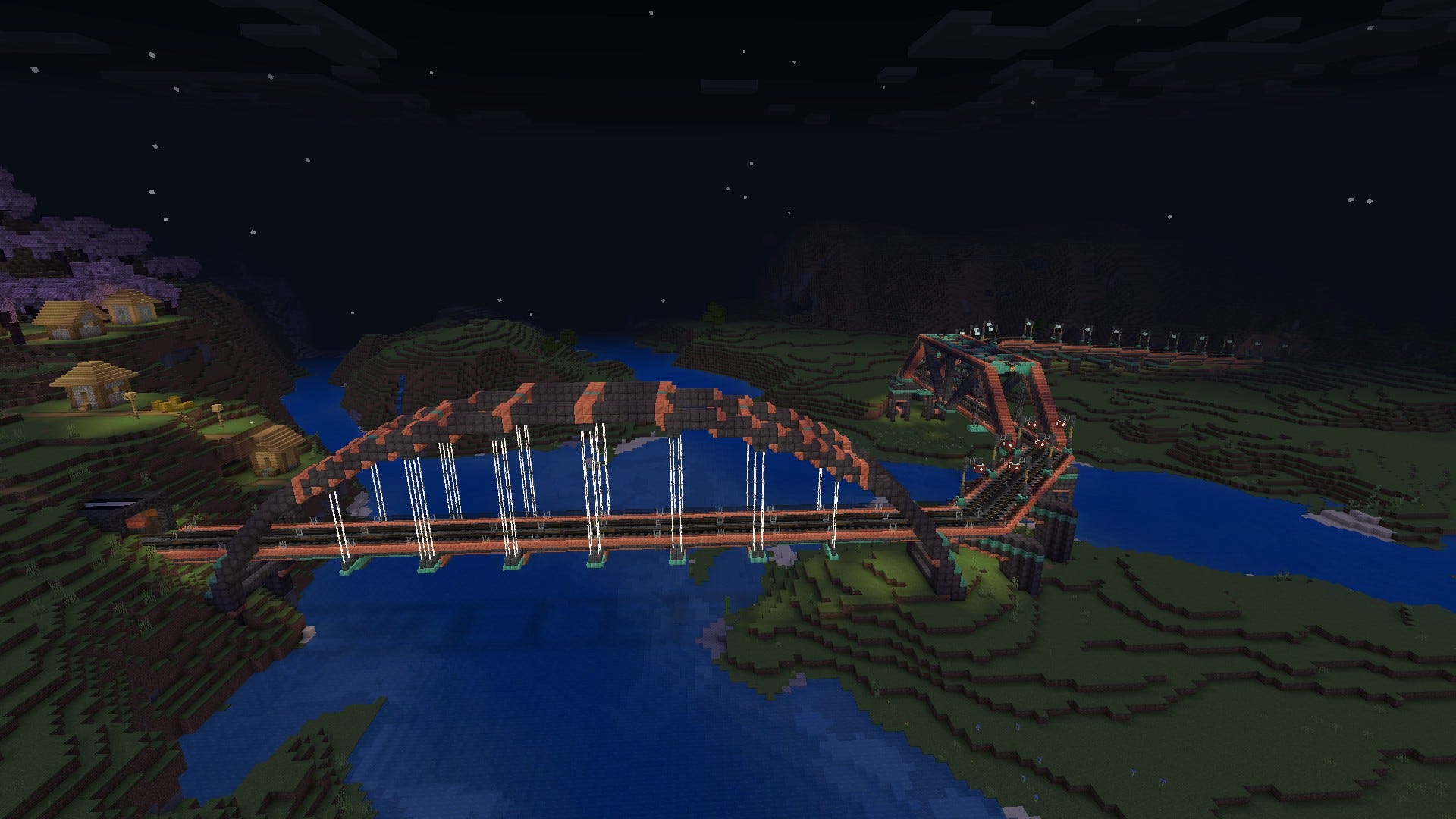
I didn’t realize I was doing this to survive. But that’s exactly what it was. It wasn’t about gaming. It was about sanity. Minecraft became the tool I used to create stability, brick by digital brick.
For some people, the way out is running, biking, or meditating. For me, it was carving tunnels into virtual rock and designing subway stations in the dark. It was the most control I had felt in years.
The Minecraft Meditation
I didn’t set out to find peace in a video game. But that’s what happened. For two years, Minecraft became a daily meditation. I’d sit down, log in, and for a little while, the rest of the world faded out.
I wasn’t just building subways. I was reconnecting with a part of myself I hadn’t seen in decades. That little boy who loved the New York City transit system, who used to draw imaginary maps with crayons, who found joy in tunnels and lights and moving trains? He got to come back and play.
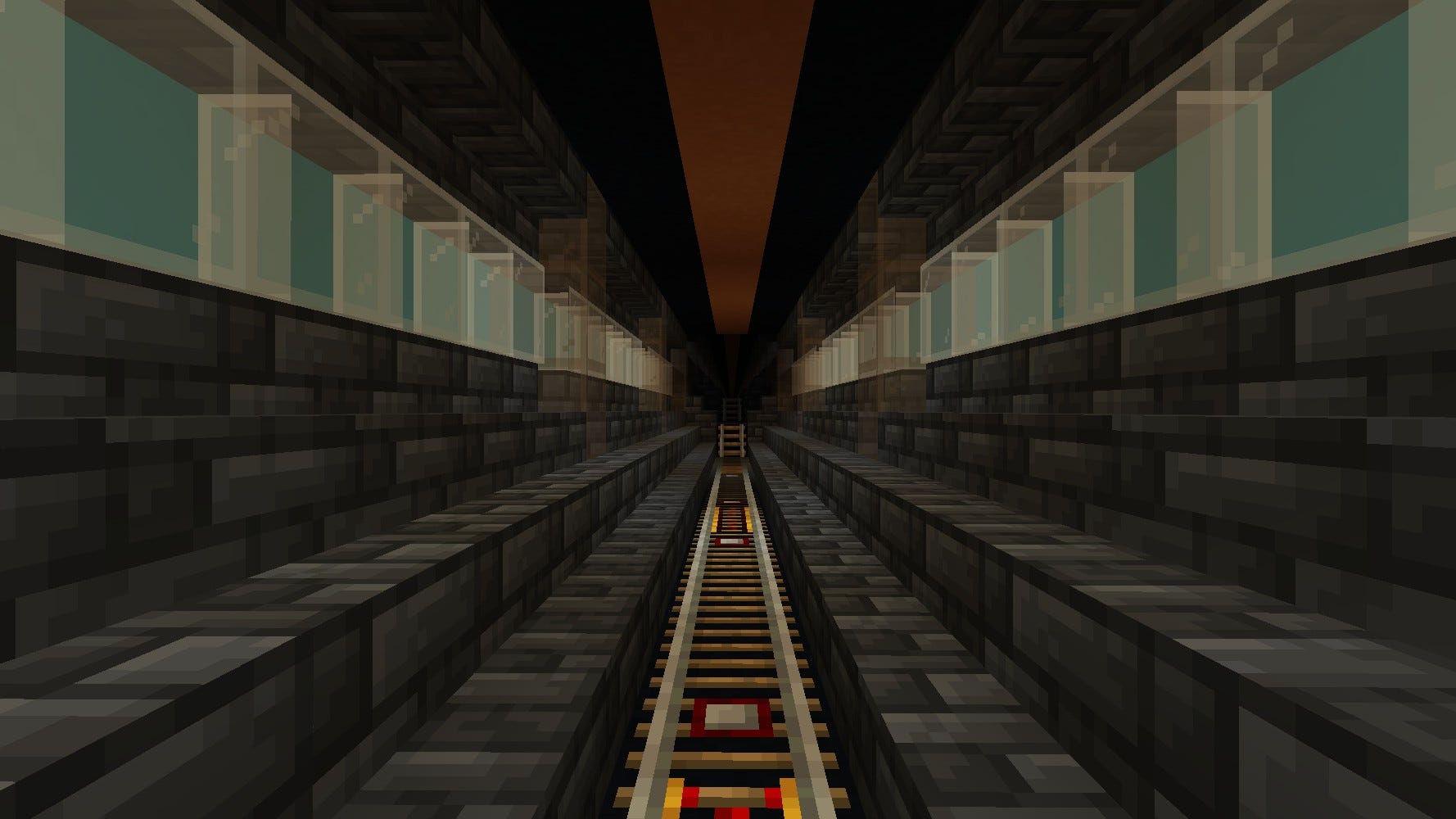
And this time, he wasn’t just dreaming. He was designing, creating, and riding through the world he imagined. It felt like magic. It felt like healing.
The world during the pandemic was chaotic, unkind, and uncertain. But inside Minecraft, I could build something beautiful. Something that made sense. Something that was mine.
Now I understand why my friend loves weeding her garden. There’s something deeply human about tending to a small patch of the world, even if it’s digital, and finding peace in the act of shaping it with care.